Breaking

Apple unveils revolutionary M4 chip with 40% faster performance

Latest Tech News

Stay updated with the latest technology news and insights

Honor’s Magic V6 doesn’t have a new rabbit to pull out of its hat
engadget.com

Honor’s Magic V6 doesn’t have a new rabbit to pull out of its hat

Honor launched the Magic V5 in August 2025 and yet its successor is being announced just seven months later. Speak to Honor’s representatives, and you can imply that it’s racing to push the envelope against both its real competition (Samsung) and its anticipated one (Apple). With so little time between launches, you’ll be unsurprised to learn that little has changed. The only other real reason this device has been pushed out so swiftly is because it’ll help Honor retain the title of making the world’s thinnest foldable. I’ll leave you to decide if you think that’s a valid enough reason to release a whole new smartphone so soon. Last year, just one of the four Magic V5 colorways measured in at 8.8mm folded and 4.1mm open while the rest clocked in at 9mm and 4.2mm respectively. This year Honor is marking its own homework with a similarly generous spirit, with the white version of the Magic V6 measuring 8.75mm folded and 4.0mm open. The black, gold and red colorways will have to settle for the indignity of measuring 9mm folded and 4.1mm open. Now, I appreciate the engineering savvy necessary to make a device this slim, but this push for more thinness needs to stop. Last year’s Magic V5 crossed the millimeters-wide rubicon from slender to dainty, to the point where, while holding it, I was worried about how durable it was. After all, foldables are regularly put through mechanical stresses that regular phones never have to deal with in normal duty. Honor says the phone is well built to withstand the rigors of normal life, including a scratch-resistant display cover. The screen is impact-resistant, there’s a far stronger hinge and it’s rated for IP68 and IP69 dust and water resistance. Claims that, I’m sure, will be tested to its limits by sceptical reviewers when the device goes on sale. The company has also been scraping away at the V6’s weight, with the white model weighing in at 219 grams, while the other three colorways are 224 grams. That’s lighter than an iPhone 17 Pro Max (233 grams), and you can bet Honor mentioned that fact in its briefings to the press more than once. Honor has also seen fit to make some massive design changes to the inside of the V6 to help shrink many of its components. This redesigned internal structure includes a new antenna, speaker chamber, vibration motor, NFC module, SIM card slot and USB-C housing. All of the space vacated by those components has been filled by a new 6,660mAh battery with 25 percent silicon content. Honor says you should expect to be able to play a video on the primary display for 24 hours with that beefy battery. It’s worth noting only the international version is equipped with this 6,660mAh cell, while the China-only variant gets an even better model. Honor said its domestic edition will have a CATL-manufactured battery with 32 percent silicon content and a rated capacity of more than 7,000mAh. Honor “And when Alexander saw the breadth of his domain he wept, seeing as he had no more worlds to conquer.” The quote comes from Die Hard — although it’s an urban myth that film coined the phrase entirely — but the sentiment applies to much of the rest of this handset. The rest of the spec sheet is more or less the same as found on the Magic V5, which itself was a modest revision of its predecessor. Essentially, there aren’t too many more worlds to conquer even at the highest end of smartphone components, so grab your weepin’ tissues. Dab at the corners of your eyes when you see the cameras are more or less identical both in the main setup and for selfies. There are two 50-megapixel lenses paired with a 64-megapixel telephoto, and up front on both the cover and internal display, there’s a 20-megapixel f/2.2 selfie lens. You’ll find similarly-meager fare in the list of changes made to the displays, since the primary screen remains the same size and resolution as before. The bezels on the cover screen have been trimmed, so it now measures in at 6.52-inches, up from the 6.43-inch on the V5. But in most of the other ways in which it matters, you’ll find that here it’s business as usual. The V5 shipped with a Snapdragon 8 Elite, 16GB RAM and 512GB storage, and that was plenty fast enough. The V6 can boast that it’s the first foldable to ship with a Snapdragon 8 Elite Gen 5 (paired with 16GB RAM and 512GB storage). While it is an upgrade on the older SoC, it’s not transformative. Let’s be honest, it’s hard not to see Honor’s desire to shuffle a new handset out the door with some marketing claims comes at the cost of any meaningful substance. On the software side, it’s business as usual, although one thing caught my eye enough to be worth comment. At several points during Honor’s briefing, the company went hard on the idea that its devices play wonderfully well with Apple’s. If you install Honor Connect onto your iPhone and Mac, you’ll be able to share files, extend your desktop and even control your AirPods. This was something the company has been pushing for a while now, but it surprised me how much it was brought up here. On one hand, it makes sense that any would-be Apple challenger would offer a friendly way in for iPhone diehards. Tell them that your Android handset will integrate with your existing devices and then hope to show them what you’ve got to offer. On the other, if you’re so eager to tag your gear onto another company’s ecosystem, it doesn’t suggest a lot of confidence in your own. Especially when you’re marketing your pricey, ultra-premium flagship foldable as “an ideal macOS companion” in your own marketing materials. Still, being able to use the V6 as an extended display for your Mac is a cool idea, no matter the broader narrative. At first blush, Honor’s Magic V6 looks like a phone that exists to satisfy a marketing demand rather than out of necessity. (I’m sure someone will point out that’s the case for a lot of new phones these days, but I’m sure you take my meaning.) To stay ahead of its rivals, it’s nipped and tucked every corner of this phone to within an inch of its life, and the end result is more or less the same handset we saw less than a year ago. That’s not to say it’s a bad phone, the V5 was a lovely piece of kit, but I can’t help but wonder if holding this device back until Honor had more meaningful improvements wouldn’t have been better. At the time of publication, Honor hasn’t shared pricing and availability information, which we will update here when it’s announced. This article originally appeared on Engadget at https://www.engadget.com/mobile/smartphones/honors-magic-v6-doesnt-have-a-new-rabbit-to-pull-out-of-its-hat-130048729.html?src=rss

March 1, 2026
How to share your location via satellite on iPhone
engadget.com

How to share your location via satellite on iPhone

Apple’s satellite features are designed for situations where cellular and Wi-Fi coverage are unavailable. In supported regions, compatible iPhone 14 or later models can connect directly to a satellite to send messages, access Emergency SOS and share location data. Location sharing via satellite is particularly useful when traveling in remote areas, hiking or driving through regions with limited network coverage. This guide explains what is required to use location sharing via satellite on an iPhone, how to prepare the feature in advance and how to send your location when no signal is available. How to share your location via satellite When there is no cellular or Wi-Fi signal available, open the Find My app. If satellite connectivity is possible, the app will prompt you to connect to a satellite. Onscreen instructions will guide you to point the iPhone toward the sky and adjust its position to maintain a connection. Once connected, select the option to share your location. The iPhone will record your current location and send it via satellite to the selected contact. During this process, it is important to keep the device steady and follow the visual guidance until the transmission is complete. After the location is sent, the contact can view it in their Find My app. The shared location represents a specific moment in time rather than ongoing movement. What you need before using satellite location sharing Location sharing via satellite is available on iPhone 14 models and later that are running iOS 18 or newer. The feature is supported only in specific countries and regions, and its availability may vary by local regulations. Satellite services also require a clear view of the sky, which means dense tree cover, buildings, mountains or being indoors can interfere with connectivity. Apple offers satellite features free of charge for two years with the activation of an iPhone 14 or later, although this policy may change over time. It is important to confirm that satellite services are active on the device before relying on them in a remote setting. Location sharing via satellite works through the Find My app. Unlike Emergency SOS, it is not intended for urgent situations and does not contact emergency services. Instead, it allows trusted contacts to see your current location when standard connectivity is unavailable. Preparing your iPhone for satellite use Before heading somewhere with limited coverage, it is important to confirm that location services and Find My are properly configured. On the iPhone, open the Settings app and tap Privacy & Security, then select Location Services and ensure the feature is turned on. Scroll down to Find My and confirm that location access is set appropriately. Next, open the Find My app and make sure location sharing is enabled. If location sharing has not been set up, the app will prompt you to choose contacts who are allowed to view your location. Only contacts added in advance can receive location updates via satellite. If you are somewhere without cellular or Wi-Fi coverage, you’ll need to use Apple’s Connection Assistant. Open Settings, then tap Satellite and choose a satellite feature. Apple also recommends reviewing the satellite connection demo, which is available within the Find My app and other satellite features. This demo shows how to hold the iPhone and move it to maintain a satellite connection. Practicing this step ahead of time can make the process quicker and less stressful when it is actually needed. Viewing shared locations and managing access Contacts who receive a satellite location update can see it in the same way as standard Find My location sharing. The location appears on the map with a timestamp indicating when it was sent. If additional updates are needed, the process must be repeated, provided satellite connectivity is still available. Location sharing permissions can be managed at any time. In the Find My app, users can add or remove contacts and adjust how long location sharing remains active. These settings apply to both standard and satellite-based sharing. How location sharing via satellite works When an iPhone loses access to cellular and Wi-Fi networks, the Find My app can switch to satellite mode. This allows the device to send limited data packets to a satellite, which then relays the information to Apple’s network and on to the selected contact. Because satellite bandwidth is limited, location updates are not continuous — the iPhone sends a snapshot of the user’s location rather than live tracking. Updates may take several minutes to send, depending on conditions and satellite availability. Battery level can also affect satellite performance. Apple recommends ensuring the iPhone is sufficiently charged before relying on satellite features, especially during extended outdoor activities. Important limitations to keep in mind Satellite location sharing is not a replacement for Emergency SOS. In situations involving immediate danger, Emergency SOS via satellite should be used instead, as it connects directly with emergency services. Environmental factors can significantly affect satellite connectivity. Cloud cover, terrain and obstructions can slow or prevent successful transmissions. The feature also works best outdoors with a clear view of the horizon. Finally, satellite services are designed for occasional use rather than frequent messaging or tracking. Location updates may take longer than expected and should not be relied on for real-time navigation or coordination. Sharing your location via satellite can provide peace of mind when traveling beyond the reach of traditional networks. By setting up the feature in advance and understanding its limitations, iPhone users can make better use of Apple’s satellite tools when they matter most. This article originally appeared on Engadget at https://www.engadget.com/mobile/smartphones/how-to-share-your-location-via-satellite-on-iphone-130000085.html?src=rss

March 1, 2026
This retro-inspired handheld comes with Banjo-Kazooie and Battletoads built in
engadget.com

This retro-inspired handheld comes with Banjo-Kazooie and Battletoads built in

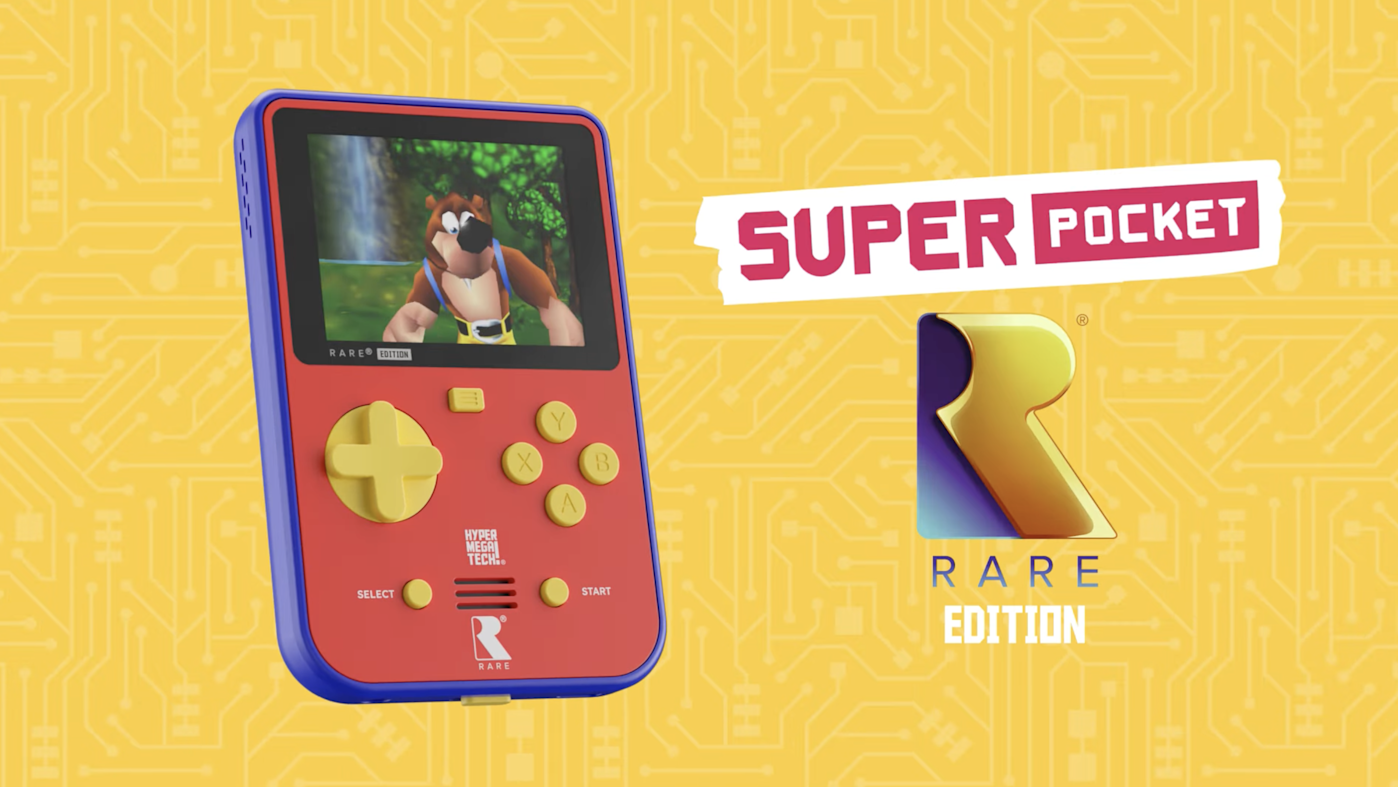
Who would've guessed we'd get to play the original Banjo-Kazooie on a handheld with just a D-pad in 2026. HyperMegaTech!'s latest release is a collaboration with Rare Ltd., the legendary game developer known for the Banjo-Kazooie franchise and, more recently, Sea of Thieves, called the Super Pocket Rare Edition. The vertical handheld features 14 classics from the British developer, including two Battletoads titles, Conker's Pocket Tales and many more. While most of the games were released on 8- or 16-bit consoles, Banjo-Kazooie will be the headliner since it was originally released on the Nintendo 64. It may sound weird to control Banjo and Kazooie with a D-pad, but HyperMegaTech! assured that the game has been enhanced and optimized specifically for the Super Pocket handheld. Since HyperMegaTech! and Evercade share Blaze Entertainment as a parent company, that means the Rare Edition handheld will be compatible with Evercade cartridges. Once you're done with the 14 included games, you can expand your Super Pocket's library with cartridges that feature collections from Taito, NeoGeo or Atari. HyperMegaTech! said the Rare Edition handheld will be available for $69.99 in June 2026, but has already opened preorders. This article originally appeared on Engadget at https://www.engadget.com/gaming/this-retro-inspired-handheld-comes-with-banjo-kazooie-and-battletoads-built-in-203111135.html?src=rss

February 28, 2026
Everything announced at MWC 2026: The new Leica Leitzphone by Xiaomi, Honor's ultra-thin MagicPad 4 and more
engadget.com

Everything announced at MWC 2026: The new Leica Leitzphone by Xiaomi, Honor's ultra-thin MagicPad 4 and more

MWC 2026 officially gets underway on March 2 and will continue through March 5, but the announcements are already coming ahead of its start. We can always count on the annual tech event to bring tons of new phones, laptops and tablets, and we're expecting to see some robots and other gadgets too — plus plenty of AI news, of course. In addition to the announcements, MWC is our chance to get hands-on time with some of the most interesting new devices, like the Xiaomi 17 Ultra. Engadget’s Mat Smith is on the ground in Barcelona, and we'll be updating this story as the week goes on to keep you in the loop on everything that caught our attention. Keep checking back here for the latest MWC news.  Xiaomi x Leica Mat Smith for Engadget Xiaomi kicked off MWC this year by announcing the global launch of its 17 Ultra smartphone, which debuted first in China back in December. It's unclear if the phone will ever come to the US, but it's now rolling out in Europe. Xiaomi teamed up again with Leica to make a photography-focused smartphone, and the 17 Ultra sports a 1-inch 50-megapixel camera sensor with a f/1.67 lens, a telephoto setup with a 200MP 1/1.4-inch sensor, and a 50MP ultrawide camera. There's also a manual zoom ring around the camera.  Check out our hands on for our first impressions of what it's like shooting with the Xiaomi 17 Ultra. And there's more to it than just the camera. The 17 Ultra has a 6.9-inch OLED 120 Hz display that peaks at 3,500 nits of brightness, and a 6000mAh silicon-carbon battery. The Xiaomi 17 Ultra starts at £1,299 (roughly $1,750). Leica also announced a new phone made in partnership with Xiaomi at MWC. It looks a whole lot like Xiaomi's 17 Ultra, but isn't the 17 Ultra, exactly. Leica Leitzphone by Xiaomi hands-on at MWC 2026 Image by Mat Smith for Engadget Like the 17 Ultra, Leica's Leitzphone by Xiaomi has a 1-inch camera sensor and physical controls for zoom and other settings, using a mechanical ring around the camera unit. It features a Leica-designed intuitive camera interface with the option to show just the essentials when you're shooting, hiding all the modes and labels. There's a monochrome shooting mode and Leica filters.  The Leica branding is splashed all over it in design and wallpapers, but it's otherwise pretty similar to the 17 Ultra, with the same specs. Like the 17 Ultra, it has a Snapdragon 8 Elite Gen 5 chip and a 6.9-inch 120Hz display. This one's priced at €1,999 (roughly $2,362). The Xiaomi Pad 8 Pro Xiaomi In addition to the 17 Ultra, Xiaomi announced two new tablets at MWC this year: the Xiaomi Pad 8 and Xiaomi Pad 8 Pro. There's nothing revolutionary here, but they're lightweight and thin, with both being 5.75mm thick and weighing 485g, and have a 9200mAh battery. The Pro model is powered by a Snapdragon 8 Elite chip, while the regular Pad 8 uses the Snapdragon 8s Gen 4 chipset.  Xiaomi also unveiled a new 5000mAh powerbank, the UltraThin Magnetic Power Bank 5000 15W. The 6mm thick power bank comes in three colors with an aluminum alloy shell: orange, silver and charcoal gray. Along with that, the company introduced the Xiaomi Tag, its own take on the Bluetooth item tracker. The Xiaomi Tag has a built-in hanging loop so it can be attached directly to a keyring, and the company says it will work with both Apple Find My and Google's Find Hub for Android. Honor MagicPad 4  Honor Ahead of MWC, Honor announced what it claims is the thinnest Android tablet in the world: the 4.8mm thick MagicPad 4. We're expecting to hear more about this at Honor's press conference on Sunday, but so far we know it features a 12.3-inch 165Hz OLED display and weighs just 450g. It comes with up to 16GB of RAM and 512GB of storage, and is powered by Qualcomm's Snapdragon 8 Gen 5 chipset. The thinness doesn't count the camera bump, Honor notes. The MagicPad 4 has 13MP rear and 9MP front cameras. It also boasts spatial audio, with eight speakers. Just as the display is slightly smaller than the previous MagicPad, the MagicPad 4 has a smaller battery at 10100 mAh. It comes with a 66W fast charger. The MagicPad 4 will run Honor's MagicOS 10. We don't yet know how much it will cost, but we'll update this after Honor's press conference (where we're also expecting to see the company's robot) with any new details.   Tecno Tecno We can always expect to see some wild phone concepts at MWC, and this year we're starting with one from Tecno. The company unveiled a modular concept smartphone design that can be as thin as 4.9mm in its base configuration. There’d be 10 modules to choose from based on the announcement, including various camera lenses, a gaming attachment and a power bank, relying on magnets to keep it all together — or Modular Magnetic Interconnection Technology, as Tecno is calling it.  This article originally appeared on Engadget at https://www.engadget.com/mobile/everything-announced-at-mwc-2026-the-new-leica-leitzphone-by-xiaomi-honors-ultra-thin-magicpad-4-and-more-172442426.html?src=rss

February 28, 2026
Alaska could be the next state to crack down on AI-generated CSAM and restrict kids' social media use
engadget.com

Alaska could be the next state to crack down on AI-generated CSAM and restrict kids' social media use

Alaska's House of Representatives unanimously passed HB47, a bill that imposes sweeping limits on when and how minors use social media apps, along with bans on generating or distributing harmful deepfakes of children. The bill's original form was focused on prohibiting the possession and distribution of sexually explicit images of children using AI, but Alaska lawmakers decided to add amendments that would impose social media restrictions. The proposed limitations include a statewide curfew on using social media between 10:30 PM and 6:30 AM, banning "addictive design features" and requiring social media platforms to verify user ages and get parental consent if they are minors. While the House bill saw 39 votes in favor and zero against, the amendments offered some hints at potential upcoming revisions. Before the bill went to a vote, some of the House representatives expressed concern about adding such broad rules on social media without consulting the companies behind them first. The bill still has to make its way through the Alaska State Senate, which already has presented a companion bill, and the governor. Alaska is following the footsteps of many other states, and the House even modeled its social media amendments in the HB47 bill after Utah. While Utah was the first to propose social media restrictions for kids, it was later met with a preliminary injunction. This article originally appeared on Engadget at https://www.engadget.com/social-media/alaska-could-be-the-next-state-to-crack-down-on-ai-generated-csam-and-restrict-kids-social-media-use-190506366.html?src=rss

February 28, 2026
Shuttered studio Bluepoint reportedly pitched a Bloodborne remake, but it got shot down by FromSoftware
engadget.com

Shuttered studio Bluepoint reportedly pitched a Bloodborne remake, but it got shot down by FromSoftware

Bloodborne fans may not be happy to hear that a remake was reportedly rejected, but that doesn't mean it's completely off the table. Bluepoint Games, Sony's closed-down studio behind many PlayStation remakes, pitched remaking the classic Gothic horror RPG in early 2025, but was blocked by the game's developer, FromSoftware, according to a Bloomberg report. As Bloomberg reported, Bluepoint pitched a Bloodborne remake after several years of working towards a live-service title in the God of War franchise that was ultimately canceled. Looking for the next project, a modern-day version of Bloodborne made a lot of sense, considering the title came out in 2015 and Bluepoint was responsible for the successful Demon's Souls remake in 2020. However, Bloomberg's sources said that FromSoftware was against it, but didn't offer a concrete reason why. With some digging, Bloomberg's Jason Schreier pointed to an interview from Kinda Funny Games with PlayStation exec Shuhei Yoshida, which aired last year. In the video, Yoshida mentioned that FromSoftware's president, Hidetaka Miyazaki, wanted to pursue a Bloodborne remake, but was too busy to do it himself and "doesn't want anyone else to touch it." After failing to get the Bloodborne remake greenlit, Bluepoint wasn't able to secure another project for more than a year, according to the Bloomberg report. Now that Bluepoint has been shut down, we're likely even further away from a remake. That's not to say a remake will never happen, but when it does, it'll have to get a stamp of approval and likely a lot of oversight from FromSoftware. This article originally appeared on Engadget at https://www.engadget.com/gaming/playstation/shuttered-studio-bluepoint-reportedly-pitched-a-bloodborne-remake-but-it-got-shot-down-by-fromsoftware-173744228.html?src=rss

February 28, 2026
You can still grab great deals on Bose headphones and Astro Bot this weekend
theverge.com

You can still grab great deals on Bose headphones and Astro Bot this weekend

Welcome to the weekend, friends! While the rest of our team was checking out Samsung’s forthcoming Galaxy S26 lineup and prepping for Apple’s “special experience” next week, we’ve been sifting through Woot’s “Video Games for All” sale and a truly weird slate of deals that, frankly, don’t have a throughline. (Some of us have also spent the last week unpacking what Huel is, but that’s neither here nor there.) Here’s what we can tell you. If you’re thinking of picking up the Galaxy S26 Ultra at launch, putting in your preorder now isn’t a bad idea. It’s also a great time to pick up the midrange QuietComfort Headphones and what many of us at The Verge consider to be the game of 2024: Astro Bot. And who doesn’t want to save on a slick handheld vac? Now let’s get to it. If you’re craving a little peace and quiet, Bose’s QuietComfort Headphones are currently on sale at Amazon in multiple colors for $199 ($150 off), which is the best price we’ve seen this year. The standard QC Headphones are essentially a refresh of the last-gen QC45s with some new software tricks, including the ability to adjust noise cancellation levels and set custom listening modes. That being the case, you still get up to 24 hours of battery life, excellent comfort, and multipoint support, making it easy to switch between Bluetooth devices on the fly. They lack Bose’s immersive audio mode and the higher-quality Bluetooth found in the newer QC Ultras, though, as well as support for lossless audio over USB-C. Then again, that probably shouldn’t come as a surprise given they’re retailing for $250 less. Bose QuietComfort Headphones Where to Buy: $359 $199 at Amazon $359 $229 at Best Buy $359 $229 at Walmart As we alluded to earlier, Samsung announced its Galaxy S26 lineup this week. There are already plenty of preorder deals to consider, but one of the best comes courtesy of Amazon, which is throwing in a $200 gift card alongside a free storage upgrade when you preorder the 512GB Galaxy S26 Ultra starting at $1,299.99. Other retailers are also running promos ahead of the phone’s March 11th release date, mind you, though they’re not as impressive; Best Buy is only providing a free storage upgrade, while Samsung is offering a mere $150 in credit. While the Galaxy S26 and S26 Plus both feel like underwhelming, iterative updates, the 6.9-inch Galaxy S26 Ultra actually impressed our resident phone reviewer, Allison Johnson. That’s largely because of the new Privacy Display, which can help shield your screen from people sitting near you (if desired), and a more powerful camera array that should improve low-light performance. Plus, like the rest of the S26 lineup, the Ultra is powered by Qualcomm’s Snapdragon 8 Elite Gen 5, which supports more advanced generative AI tools and a souped-up version of Gemini that can carry out certain tasks in third-party apps on your behalf. No one likes calling an Uber themselves, anyway. Read our S26 Ultra hands-on impressions. Samsung Galaxy S26 Ultra Where to Buy: $1299.99 at Samsung (256GB, with $150 credit) $1499.99 $1299.99 at Amazon (512GB, with $200 gift card) $1499.99 $1299.99 at Best Buy (512GB) You can still grab a physical copy of Astro Bot at Walmart for $32.99 ($27 off), an all-time low. The fantastic PlayStation 5 exclusive — which won Game of the Year at the 2024 Game Awards — has players take on the role of Astro, a lovable robot who sets off on a space adventure after his crew is lost in a sudden attack. Despite the prior game being a pack-in title for the PS5, Team Asobi’s full-sized sequel brims with inventive platforming, whimsical power-ups, and a kind of lighthearted fun that recalls the best of Crash Bandicoot and Spyro the Dragon. Thankfully, it never feels outdated, even if ‘90s vibes are totally there. Read our Astro Bot review. Astro Bot Where to Buy: $59.99 $32.99 at Walmart If you’re looking for a relatively compact handheld vacuum that can reach into car crevices and suck up crumbs on your desk, Fanttik’s foldable Fold V10 Apex is still on sale at Amazon for $85.49 (about $65 off), matching its best price to date. Fanttik’s 17,000Pa vac features an extendable nozzle that pivots up to 210 degrees, along with a built-in LED light to help illuminate the dark corners of your vehicle. An onboard display, meanwhile, indicates the remaining battery life and suction mode, as well as the status of the washable filter. It also comes with a range of useful add-ons, including an upholstery tool, two brush heads, and an extendable hose with a crevice tool for hard-to-reach areas. It even charges via USB-C, making it easy to juice after the battery runs out in about 30 minutes or so. Read our recent profile on Fanttik. Fanttik Fold V10 Apex Foldable Car Vacuum Where to Buy: $149.99 $85.49 at Amazon $149.99 $94.99 at Fanttik (with code V10APEX) More ways to save this weekend You can pick up five second-gen AirTags for $99.99 ($24 off) at Costco, though non-members will have to pay a $5 surcharge. That’s the first discount we’ve seen on Apple’s latest location tracker, which builds upon its predecessor with an upgraded ultra-wideband chip and extended range, allowing for more precise tracking from up to 50 percent farther away. It’s also better at locating items in multi-story homes, and the built-in speaker is up to 50 percent louder, making it easier to hear. Read our review. AOC’s 27-inch QD-OLED gaming monitor (Q27G41ZDF) is on sale for $379.99 ($170 off) at Best Buy, which is its lowest price to date. The 1440p display is a great entry-level OLED, with a sharp 16:9 panel and a speedy 240Hz refresh rate. As a QD-OLED monitor, it delivers the deep blacks and vibrant colors the technology is known for, along with G-Sync compatibility to help reduce screen tearing. It also includes a three-year warranty for added peace of mind. You can snag the Sharge Pixel 100 from Amazon (with Prime) and Sharge for $69.90 ($30 off) right now, which is its lowest price to date. The small, retro-inspired GaN charger delivers up to 140W of power, which is enough to charge a 16-inch MacBook Pro to 50 percent in about 25 minutes. It also features three USB-C ports for powering multiple devices, along with a customizable dot-matrix display that shows the real-time wattage for each port.

February 28, 2026
Leica’s Leitzphone by Xiaomi has a huge 1-inch camera sensor and a stylish new design
engadget.com

Leica’s Leitzphone by Xiaomi has a huge 1-inch camera sensor and a stylish new design

Alongside a global launch for Xiaomi's 17 Ultra (read about that right here), the company announced a further deepening of its relationship with Leica. The CEO of Leica, Matthias Harsch, took to the stage to announce a new Leitzphone, which appears to be an even deeper collaboration than 17 Ultra by Leica, which is a different phone. Confused? That's fair.  Design-wise, Leica has shifted back to a single tone body color, which looks more "Leica" to this camera dilettante's eyes. And if you’re thinking you’ve heard of the Leitzphone before, you probably have: it was a series of phones made by Sharp that launched in Japan in 2021. They all had a 1-inch camera sensor, as does Xiaomi’s first Leitzphone. It also has a mechanical, physical ring dial around the camera unit to control settings like zoom, exposure and shutter speed. The camera interface is also designed by Leica. It's designed to be as intuitive as possible, with an Essential mode in the camera app that strips away all those modes and labels, showcasing whatever you're looking to shoot. You can switch between a monochrome shooting mode and a more familiar punchy, contrasty Leica filter. And that's it. Aside from that there's no major standout interface or UI changes that I could spot while trying out the Leitzphone briefly at Xiaomi's MWC keynote. However, if you're intrigued by the functionality — or the cameras — check out our hands-on coverage and sample photos of the Xiaomi 17 Ultra. The cameras are good. Image by Mat Smith for Engadget All three iterations (the regular Xiaomi 17 Ultra , the "by Leica" edition and the Leitzphone) have a Snapdragon 8 Elite Gen 5 chip and a 6.9-inch 120Hz display that can reach up to 3,500 nits of peak brightness. While cameras are naturally the focus, it’s a flagship device by pretty much any metric. It also has a 6,000mAh battery for extended vacation photo shoots. Barring some Leica-tinged wallpapers and design accents, it's a lot like the 17 Ultra by Leica, just with different messaging. This is Leica's phone, made by Xiaomi, but does a rose by any other name still have great low-light photography? Maybe increased Leica branding will be enough to coax its camera fans into making this their next smartphone, perhaps. Image by Mat Smith for Engadget After years of collaboration (and cute little badges), this may be the first pure "Leica phone" manufactured by Xiaomi but sold directly by both companies. It's priced at €1,999 (roughly $2,362), but it's not known yet whether this phone will launch in the US. Welcome to MWC, everyone. This article originally appeared on Engadget at https://www.engadget.com/mobile/smartphones/leica-leitzphone-xiaomi-mwc-2026-135744417.html?src=rss

February 28, 2026
Xiaomi 17 Ultra hands-on: Incredible cameras, but maybe hard to get
engadget.com

Xiaomi 17 Ultra hands-on: Incredible cameras, but maybe hard to get

China’s biggest phone makers continue to relentlessly forge ahead with high-spec phones that you may never see in the US. With the Xiaomi 17 Ultra this year, the company has continued its pattern from previous iterations by focusing on powerful camera sensors, huge batteries and… being selective about global availability. Xiaomi’s 17 series is launching across multiple European territories months after its Asia debut, but at the time of writing, no word yet on US availability. Another logistical point of interest? When we last checked out Xiaomi’s devices, it was the 15 series, and the company has decided to skip 16 and leap straight to 17, conveniently matching Apple’s latest number. Storied camera brand Leica has been involved with Xiaomi’s phones for a few years and its newest flagship doesn’t disappoint in that regard, because this is another Xiaomi device dedicated to photography. Image by Mat Smith for Engadget The 17 Ultra has a huge 1-inch 50-megapixel main camera sensor with a f/1.67 lens, and a telephoto setup with a 200MP 1/1.4-inch sensor and going up to 4.3x optical zoom. Xiaomi claims it’s capable of up to 17x “optical-level zoom,” but quality doesn’t measure up to, say, the Oppo Find X9, with its dedicated telescopic lens add-on. There’s also a 50MP ultrawide camera to round things out. The main camera is very impressive, delivering plenty of detail and performing incredibly well in low light, seemingly before any computational photography kicks in. A new Light Fusion 1050L sensor features LOFIC HDR technology, delivering stronger control over highlights and more detail in darker areas of your shots. I've been impressed by the balanced color tone and contrast, without having to edit or add one of the (many) Leica camera filters. If anything, the slightly heavy-handed algorithms can sometimes ruin parts of a shot. For instance, by scrambling lettering or capturing blurry, AI-mutated faces where computational photography takes a swing (and a miss) at people in the distance. Mat Smith for Engadget The telephoto camera alone is also technically interesting in a few ways. It offers continual optical zoom across the 75-100mm range without in-sensor cropping. This means the lenses physically move to deliver lossless zoom across a range of distances, without jarring leaps between camera sensors and crops. This doesn’t run across the full gamut, but it does roughly cover the 3-4x optical zoom range, which is often used in portrait photography. The APO (apochromatic) lens design on the telephoto is more immediately useful and effective. An APO lens significantly reduces chromatic aberration by focusing three wavelengths of light (red, green and blue) onto the same focal plane. This lens design means it can correct color fringing and improve image sharpness. At full optical zoom, this light fitting at Soho Theatre Walthamstow doesn't bloom or fringe to the extent that most smartphone zooms suffer from. Mat Smith for Engadget At higher zoom levels, fringing and lighting bloom often hamper telephoto photos on smartphones, and Xiaomi’s solution has some appeal. I noticed less fringing than on other zoom-capable Android phones from Samsung, Oppo and Google. It also supports macro photography, but is hindered this time by a minimum focal distance of 30cm (11.8 inches). Most smartphone cameras’ macro modes let you get much closer. The 17 Ultra can capture up to 8K video (at 30 fps), 4K Dolby Vision up to 120 fps, and 4K 120 fps Log video, ensuring you can make the most of that huge 1-inch sensor in video, too. That said, it seems to struggle with stabilization at times, while its low-light performance doesn’t match its prowess in still photography, lagging behind flagship phones from Apple, Google and Samsung. There's also a special Leica edition of the 17 Ultra, which is largely the same, specification-wise, but with a manual zoom ring around the camera unit. It's a cool gimmick, but felt oddly loose on a few devices I've handled.  Xiaomi made a few design changes to its Ultra line this year, with a new, entirely flat display, and flattened edges that look like a certain family of devices. In fairness, it’s not the only company using imitation as flattery. There’s also IP68 protection against dust and water. While cameras may be the highlight, this is a flagship device by any specification metric. With a 6.9-inch display, this expansive OLED display has variable refresh rates (1-120Hz) and peaks at 3,500 nits of brightness. At that size, the Xiaomi 17 Ultra is in the territory of devices like the iPhone 17 Pro Max and S26 Ultra. A phone this size isn’t for everyone, but it is the thinnest Ultra phone from Xiaomi to date, with a profile measuring 8.29mm. Xiaomi has also reduced the camera unit’s diameter and raised it on the device, making it easier to use and helping keep fingers out of your shots. Image by Mat Smith for Engadget Also, I’d be remiss if I didn’t mention the huge 6,000mAh silicon-carbon battery, with support for Xiaomi’s 90W HyperCharge (if you have the right charger) and 50W wireless HyperCharge (which also requires Xiaomi’s own dock) speeds. Other phone makers: Please put a battery this huge in your flagship. At MWC 2026, the company announced the global launch and rollout of the device across Europe, including the UK where the Ultra will start priced at £1,299 (roughly $1,750). We're still waiting to confirm US availability and pricing. While the specs are powerful, “launching” a flagship device that’s already been in the wild for a few months — even if elsewhere in the world — reduces the spectacle. This article originally appeared on Engadget at https://www.engadget.com/mobile/smartphones/xiaomi-17-ultra-global-launch-hands-on-leica-camera-143006810.html?src=rss

February 28, 2026